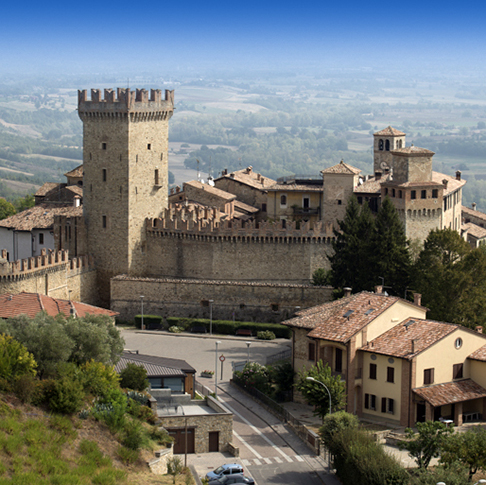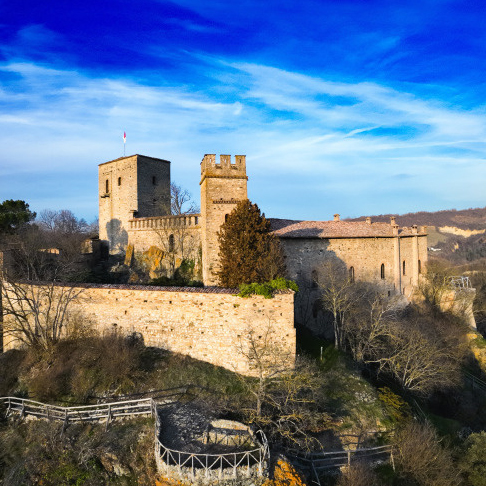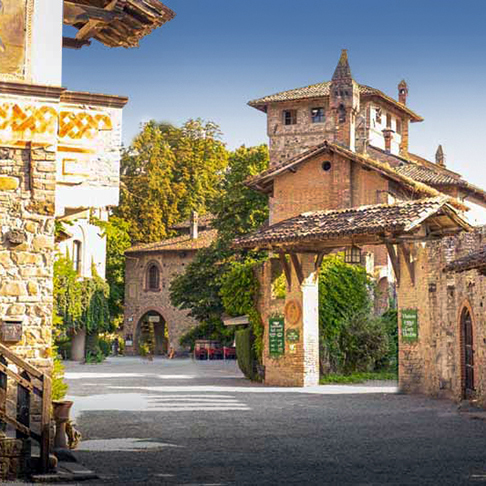


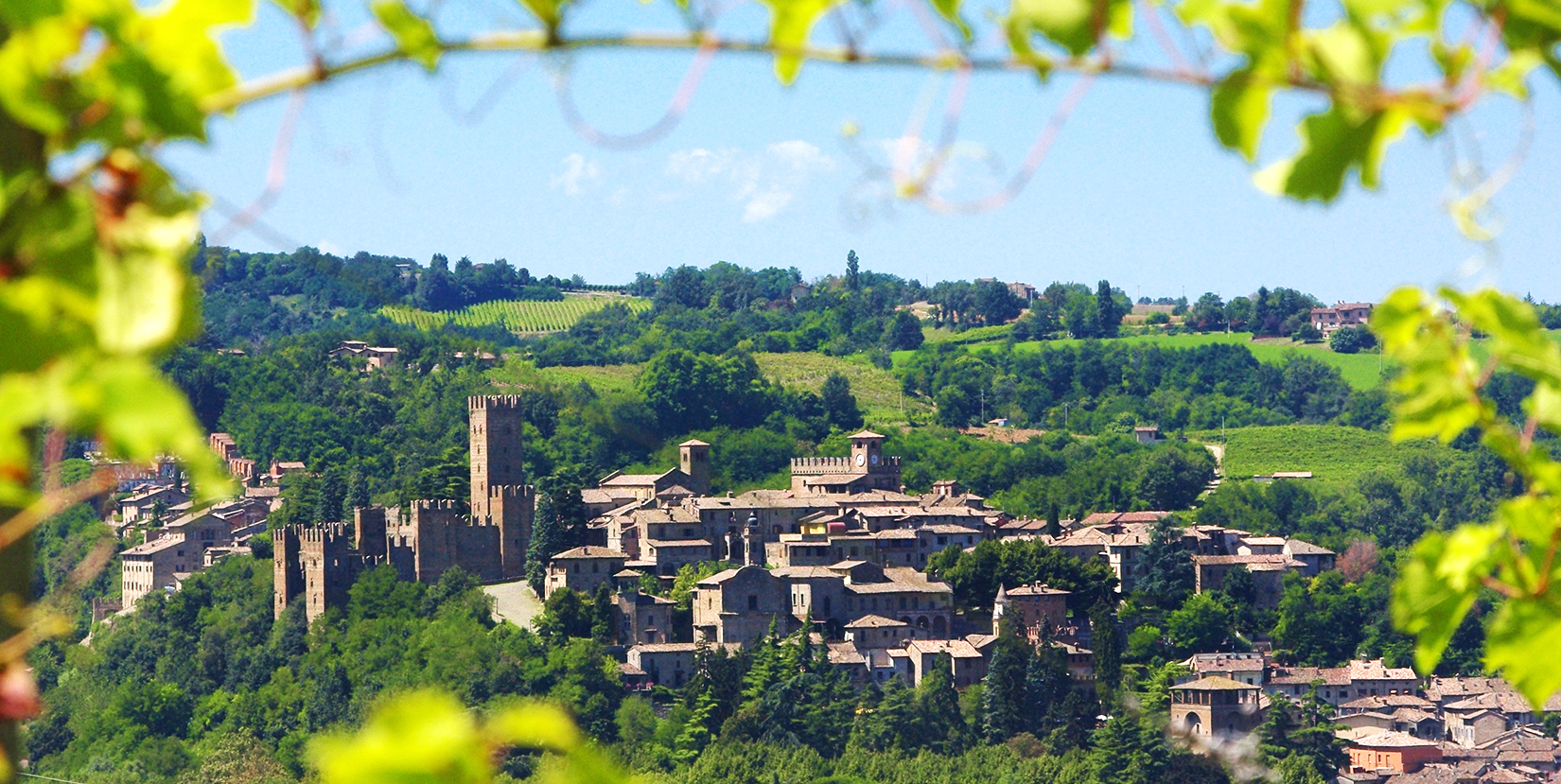
n the heart of the Piacenza hills, where the Arda River begins its journey toward the plains, lies Castell’Arquato: a jewel nestled between nature and history. The town sits right at the midpoint of the river’s course, resting on the final foothills where the landscape gently opens toward the lowlands. Dominating the area is the picturesque hill on which the medieval village stands, both a historic center and a guardian of centuries of history. Its location on the river’s left bank is not only scenic but also strategic—a privileged vantage point from which to observe and protect the valley.<br>Castell’Arquato is also recognized as one of Italy’s 100 most beautiful villages and has been awarded the prestigious Orange Flag by the Italian Touring Club, a mark of excellence for the quality of hospitality and tourism offerings.
Castell’Arquato is not just a place to visit: it is a story to walk through, an emotion to breathe, a memory to carry like a dream that has walked through history.
In Castell’Arquato, every stone tells a story, and every corner whispers ancient memories. This land, inhabited by humans since prehistoric times—with traces dating back to the Paleolithic—has witnessed civilizations, dreams, and power, leaving a legacy that can still be felt today within the village’s walls. It was with Rome that the village began to take shape and meaning: after the abandonment of Veleia, the ancient center of the area, Castell’Arquato emerged as the new beating heart of the valley. Its name has deep roots in history, linked to Gaius Torquatus, a Roman landowner who is said to have established the first “castrum,” the original nucleus of the settlement. Thus was born Castrum Torquati – today’s Castell’Arquato. Over the centuries, the village became a crossroads of peoples and destinies: the Lombards brought new ways of life and faith. It was the nobleman Magno who, around the mid-8th century, founded the first parish church, a spiritual heart that would later give rise to the Collegiate Church of Santa Maria Assunta, still a majestic and silent guardian of time.
ith the arrival of the new millennium, Castell’Arquato intertwined its history with that of Piacenza. Thanks to the city’s bishop, the community gained partial autonomy, ushering in a period of prosperity and growth. However, it was in the 14th century, under the rule of the Visconti, that the village took on the proud appearance that still defines it today: the Rocca, commissioned by Luchino Visconti, still rises on the horizon as a symbol of power and protection. After the Visconti came the Sforza of Santa Fiora, and later the Farnese, opening an era rich in art, architecture, and Renaissance beauty. Not far from the heart of the village, in the hamlet of Vigolo Marchese, lies another treasure: a splendid Romanesque parish church, accompanied by a rare circular-plan baptistery, nestled in the silence of the Val Chiavenna. Even the subsoil of this area still reveals fragments of a distant past. In the zones within the Stirone and Piacenziano Park, paleontological finds of immense value were already discovered at the end of the 18th century, now carefully preserved in the “Giuseppe Cortesi” Geological Museum, housed in the historic Ospitale di Santo Spirito. But Castell’Arquato is not just about history: it is also living art. It was here that Luigi Illica (1857–1919) was born, the brilliant poet and librettist who gave his words to musical giants such as Puccini and Mascagni. Today, an international festival is dedicated to him, bringing the magic of opera to the monumental square every summer and transforming the village into a stage under the stars.
What to See in Castell'Arquato
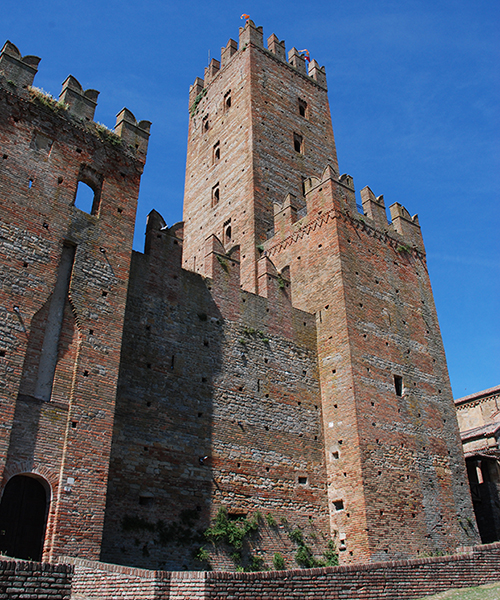
Visconti Castle
The undisputed symbol of the village, the Visconti Rocca rises majestically at the highest point of Castell’Arquato, overlooking the entire historic center. Its imposing presence shapes the surrounding landscape and can be seen clearly from the nearby hills. From the top of the tower, a spectacular view unfolds, encompassing the Piacenza Hills, stretching across the Po Valley, and on the clearest days, reaching all the way to the Apennine peaks. A place that combines history, charm, atmosphere, and truly breathtaking scenery.
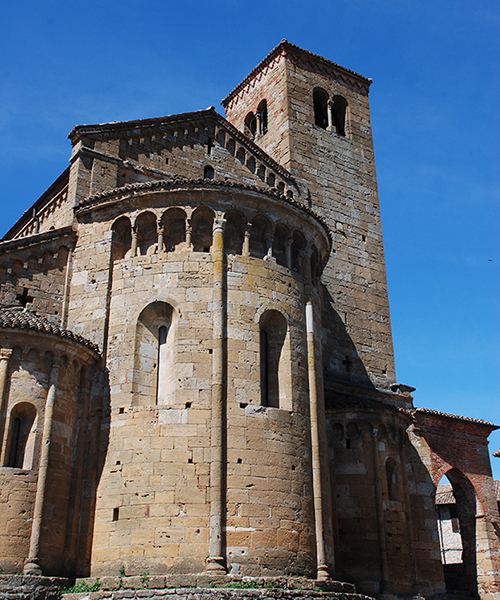
The Collegiate Church of Santa Maria
Overlooking the main square, the Collegiate Church of Santa Maria is one of the oldest religious buildings in the village. Its origins likely date back to the 8th century, although over the centuries it has undergone numerous expansions and enhancements. The exterior, simple and austere, gives little hint of the richness inside: the church houses splendid frescoed vaults and 15th-century decorations, recently restored and brought back to their former glory.
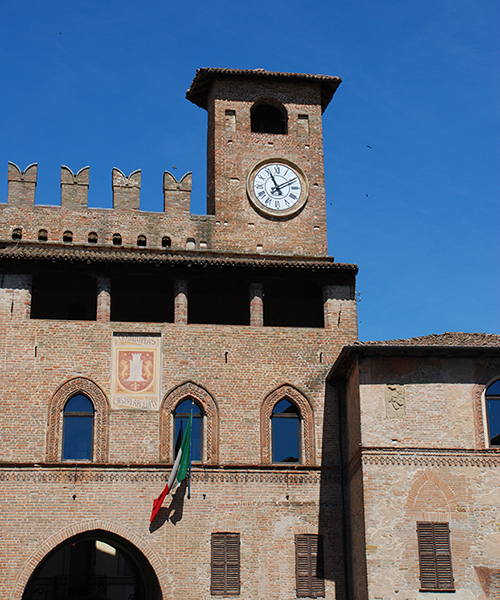
Palace of the Podestà
Although not open to visitors inside, the Palazzo del Podestà is still worth a stop, if only to admire its impressive façade. Overlooking the village’s main square, the building immediately captures attention with its striking presence and historical significance. It was constructed at the end of the 13th century at the behest of Alberto Scotti, lord of Piacenza. Originally built as a private residence, it was later transformed into the offices of the Podestà and, in later periods, also housed the local magistrate’s court.
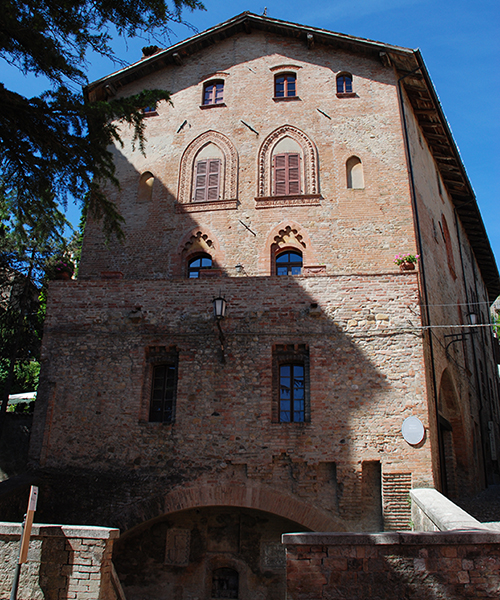
The Duke's Palace and its Fountain
The Duke’s Palace takes its name from the Sforza Dukes of Milan, who established their residence here in the 16th century. However, the building dates back to the 13th century, when it was constructed as the seat of the Palace of Justice. Although not open to visitors inside, its imposing medieval façade is well worth a stop. Directly in front stands the Duke’s Fountain, still in operation, which was once used by the townspeople as a washhouse.
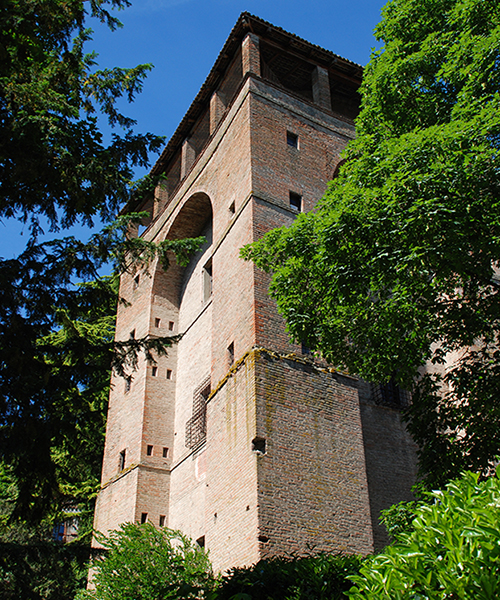
Farnese Tower
The Farnese Tower is one of the most unique and fascinating buildings in the village, commissioned by Duke Bosio II Sforza but never completed. Its original purpose remains uncertain—possibly defensive—but some of its refined architectural details make it truly one of a kind. Many intriguing legends surround the tower, inspired in part by the discovery of secret passages, including one that connects it directly to the nearby Duke’s Palace.
Geological Museum
Originally used as a hospital in 1272 by the initiative of the Confraternity of Santo Spirito, the building provided shelter for pilgrims traveling along the Via Francigena to Rome. Since 1990, it has housed the Geological Museum, thanks to its spacious exhibition areas. Inside, visitors can admire over a thousand fossils and natural specimens, including the original skeleton of a whale, discovered in the nearby hills.
Top Events in Castell’Arquato
astell’Arquato hosts a variety of events and festivals, many of which celebrate local products, particularly the wines of the Piacenza region. Historical reenactments are also very popular, keeping ancient medieval traditions alive. Some of the most notable events include: Monterosso Val d’Arda Festival A fair dedicated to Monterosso wine, produced in the vineyards of the Val d’Arda. In the charming alleyways of the village, visitors can taste the finest products from local producers, as well as traditional food and wine specialties. Vernasca Silver Flag In June, this vintage car race winds through the rolling roads of the valley, attracting enthusiasts and collectors alike. The most anticipated stage is the one that passes right through the center of Castell’Arquato. Relive the Middle Ages During this event, the village transforms for two days with tournaments, processions, and medieval reenactments. There are also food stalls where visitors can sample traditional dishes. Glasses Under the Stars Organized by the Città del Vino association, this festival brings back to Castell’Arquato the joy of gathering together, enjoying a good glass of wine, and discovering new food and wine experiences. Chestnuts and Memories Festival An event for both children and adults, featuring traditional games, demonstrations of ancient crafts, and classic dishes, offering a fun way to rediscover the past.